Tradwife Aesthetic vs. Tradwife Ideology: What Woodwives Is (and Isn’t)
Is this a tradwife blog?’
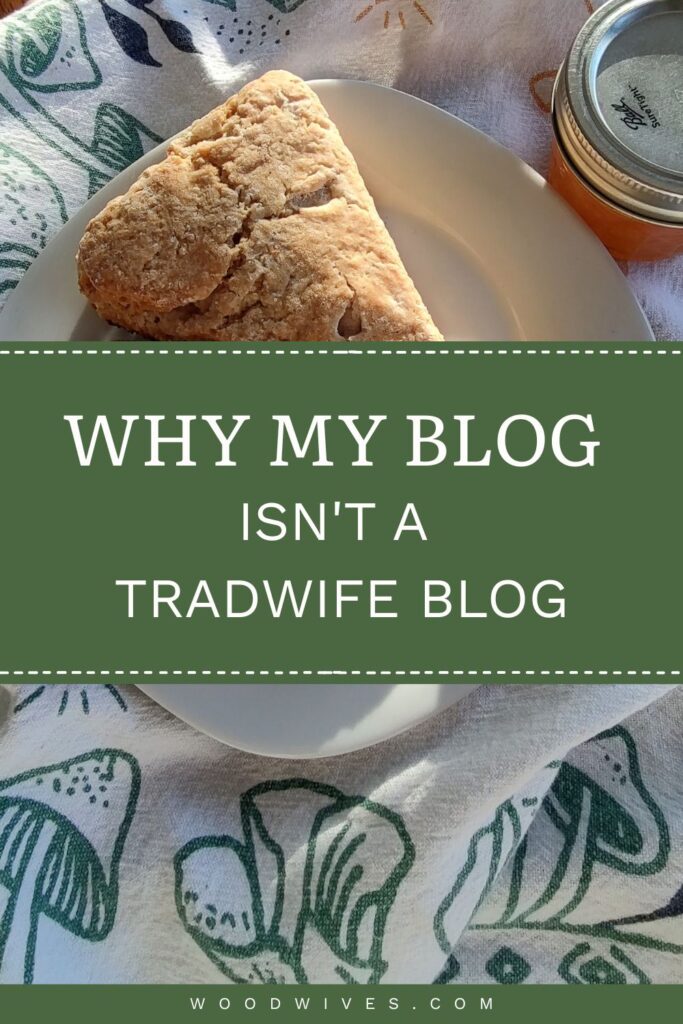
No. But I understand why someone might wonder. I love many of the things associated with the tradwife aesthetic, gardening, baking bread, preserving food, and creating a cozy home.
I even take inspiration from (and have written about) a Swedish artist’s home from the 1890s, and my blog is literally named after folklore about domestic forest spirits. On paper, that’s a lot of overlap with the tradwife aesthetic.
But I don’t share the ideology that’s often packaged with that aesthetic. For starters, I’m not here to tell anyone what they should do with their time, their kitchen, their body, or their life. Ever. I believe everyone deserves the freedom to build a life that fits them, regardless of gender identity.
I started this blog because I like collecting folk wisdom, the kind that gets handed down on index cards and in garden sayings, and because I want to love the home I have. I want that for you, too.
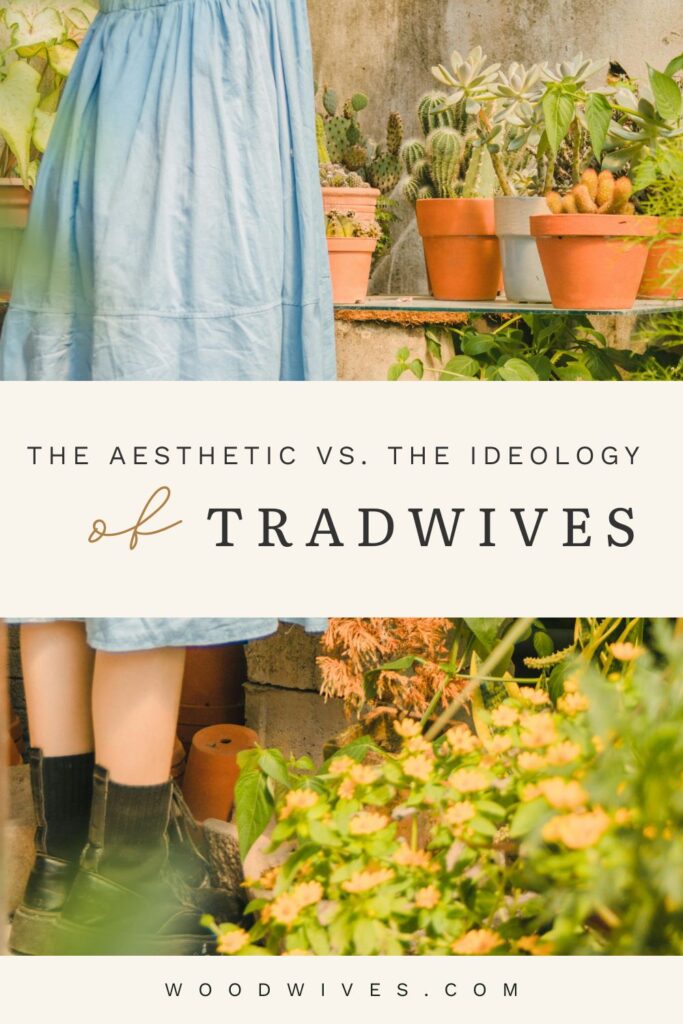
The Tradwife Aesthetic vs. the Tradwife Ideology
The term “tradwife” is short for traditional wife and the trad wife movement is generally about a specific ideology. It’s an ideal built around rigid gender roles, usually framed as a return to how things “used to be.” That version of the past often overlooks what history actually looked like. Instead, it’s presented as a home with a husband who works outside the home and a wife who doesn’t. He’s the leader of the family. It’s as much a political and social statement as it is an aesthetic one.
I understand the appeal of the tradwife aesthetic. It can look so beautiful! Homemade bread baked by a woman fresh from the garden with flour on her apron is gorgeous on camera. But the aesthetic and the ideology aren’t the same thing, even when they get bundled together.
And if you’re seeing a “tradwife” account on social media, you’re watching someone whose work extends beyond the home. She’s producing content, often earning an income from it and building a business.
“The ethos is, “You too could just be running around in a field with your 12 children wearing the soft, unstructured dress and no bra and baking sourdough and growing your heirloom tomatoes and not working” — when putting that out on the internet is so much work.
Many of these women are now the breadwinners in their families.” [1]
Many of the creators labeled with the tradwife aesthetic aren’t actually living the ideology they promote. There’s nothing wrong with making money doing that. I just want you to know what you’re actually seeing.
What Woodwives Actually Is
I write about folklore, food, gardening, and making a home feel like yours. I’m not making an argument about what a household should look like, who should earn money, or how relationships should be structured.
So to be clear, I’m a leftist and a feminist who is always working to understand and practice intersectionality.
I don’t buy the idea that feminism taught women to devalue being a stay-at-home mom, or cooking, gardening, or any part of domestic life. That’s a narrative I hear much more often from conservative critics of feminism than from feminists themselves.
For many stay-at-home moms, whether by choice or circumstance, tradwife content can feel validating. [2] Often we don’t even realize we’re seeing tradwife content. Not every creator realizes they’re making it, and not all of it is explicitly far-right.
Rather than representing purely self-reliant family life, both nineteenth-century homesteading and the postwar housewife ideal relied on significant government support. Homesteading was the result of “the huge government subsidy program known as the Homestead Act,” while the 1950s were similarly shaped by housing and education subsidies. [3]
Women have always worked. That’s never been in question. What’s been in question is whether that work gets paid, credited, or even seen. Domestic labor, whether it’s mine or my grandmother’s or yours, has historically been expected rather than valued, inside and outside the home. I want all of you to have good choices available to you and to have your labor recognized and valued.
So, No
When I bake bread or plant the broccoli transplants for the autumn garden, please know that I’m not telling you how you should live. I’m doing something that brings me joy, and I want that joy to be available to anyone who wants it.
I say we be woodwives instead. A little generous, a little vengeful as needed, taking our delights where we may. Which is often in some kind of baked good. I’m so glad you’re here. Take what’s useful, skip what isn’t. Create a home and life that serves you.
I love that for you.

Footnotes
[1] Odell, Amy. “The Lie of the Trad Wives.” “BackRow,” Substack, July 17, 2025.
[2] Hill, Faith. “The Unglamorous Truth About the Average Tradwife: Most Stay-At-Home Moms Simply Can’t Afford Child Care.” The Atlantic, June 8, 2026
[3] Sherman, Carter. “Sundresses and Rugged Self-Sufficiency: ‘Tradwives’ Tout a Conservative American Past … That Didn’t Exist.” The Guardian, July 24, 2024.
References
Odell, Amy. “The Lie of the Trad Wives.” “BackRow,” Substack, July 17, 2025.
https://amyodell.substack.com/p/the-lie-of-trad-wives
Hill, Faith. “The Unglamorous Truth About the Average Tradwife: Most Stay-At-Home Moms Simply Can’t Afford Child Care.” The Atlantic, June 8, 2026
https://www.theatlantic.com/family/2026/06/tradwife-america-reality/687454/
Sherman, Carter. “Sundresses and Rugged Self-Sufficiency: ‘Tradwives’ Tout a Conservative American Past … That Didn’t Exist.” The Guardian, July 24, 2024.
https://www.theguardian.com/lifeandstyle/ng-interactive/2024/jul/24/tradwives-tiktok-women-gender-roles