How to hang dry summer herbs
Our garden has several varieties of fresh herbs and taking the time to hang dry summer herbs is my favorite easy way to give my home a delightfully witchy vibe. All you need is some string.
Where I live in Zone 6b, we grow and dry rosemary, thyme, dill, and oregano. Right now, the garden is getting a little overgrown, a bit wild. The mid-to-late summer garden pours over the raised garden walls, insists you to step over its vines, and proudly displays what has grown.
It also means that the harvest can be a bit out of hand. Instead of wasting any of it, let’s preserve what we’re not able to cook with now.
Other herbs that you can hang dry successfully are marjoram, mint, summer savory, and cilantro. Additionally, if you have an abundance of flowers you can gather some in vases on your table and hang dry others for later.
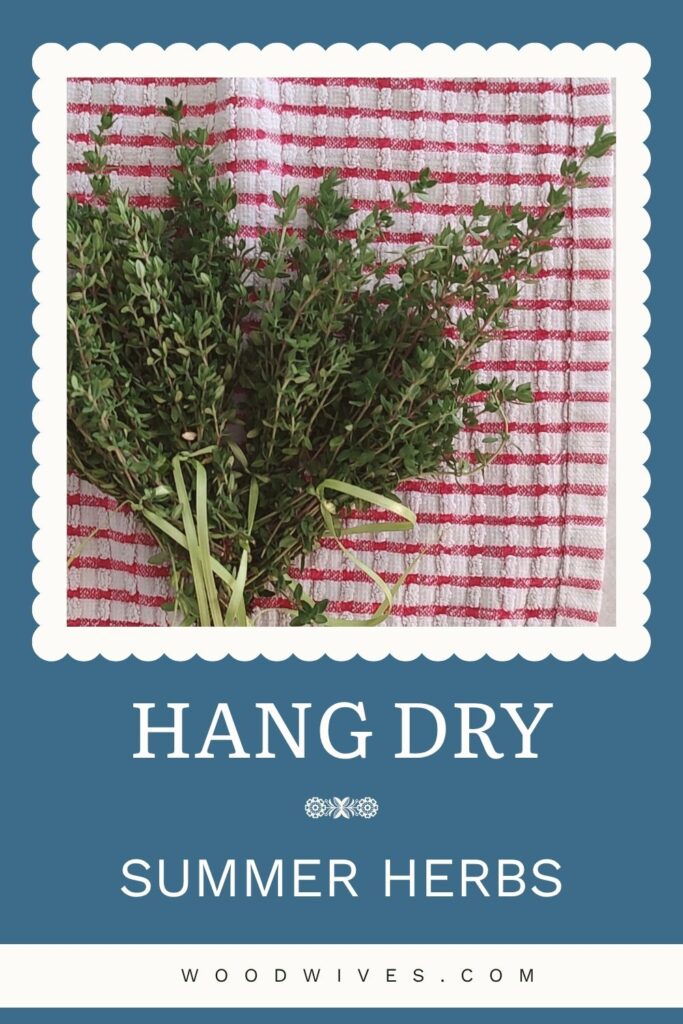
Harvesting Leaves (and Flowers)
Most herbs like being harvested in the morning or in the early evening. Essentially, in the most intense heat of the day they are already stressed and not at their best. But I rarely do things in the “best” time. If you’re grabbing some for dinner, consider harvesting a bit more to make a bundle for drying?
Using sharp garden snips or your hands for pinching, harvest your herbs. For herbs with thick, woody stems like rosemary or thyme, only snip off the newer shoots. Leave the base of the plant so it can grow new stems. For plants like basil or sage, snip or pinch sections tender sections that look like they want to go to flower. You’ll leave a sort of V shape to grow more fully.
Harvest enough to tame the herb garden back a bit, while leaving some to still grow. Aim to take no more than a third of most plants right now. The growing season hasn’t ended yet!
Bring them inside immediately, don’t allow them to wilt in the heat while you do other chores. Not that I’ve ever done that.
Preparing your herbs
Whatever you bring inside, set some aside for dinner and take the rest to a bowl of clean, cold water. Plunge your herbs in water to wash them of dirt (and maybe a bug or two), then lay them out gently on a kitchen towel or four to dry for a bit.
Go read a book, make dinner, or wander around for a while while they dry, at least an hour.
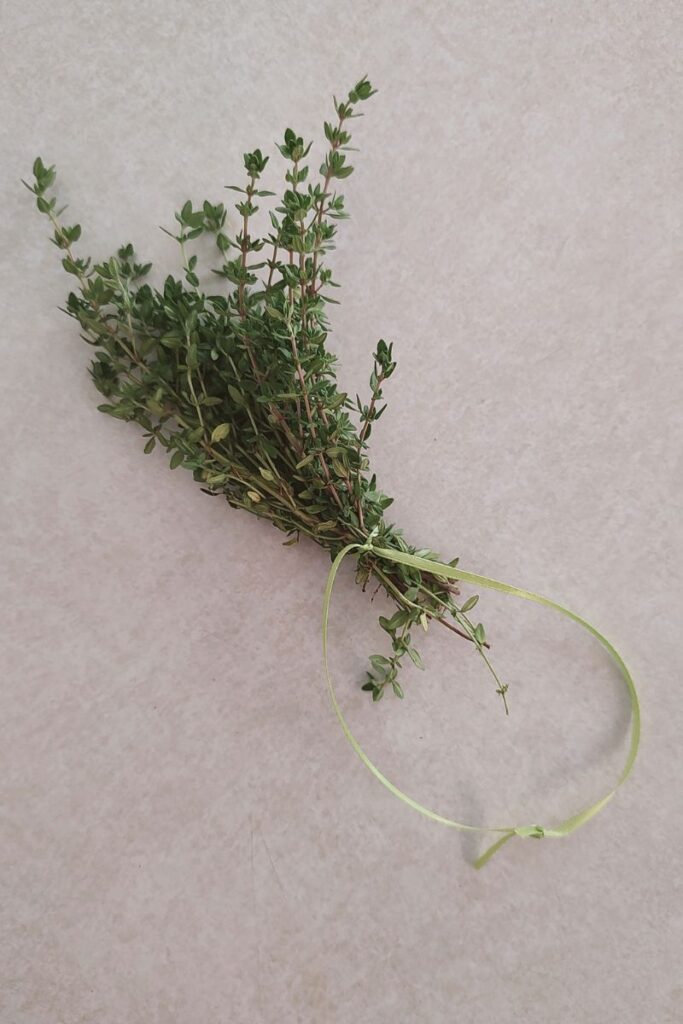
Then, using string or small elastics or ribbon, make bundles of each herb and tie them together. I like to also tied the ends of the ribbon to make a loop at the end for hanging.
If you’re concerned about the leaves falling off to the floor, consider putting the entire bundle in a paper bag to collect any fallen leaves. Tie the string around the paper bag as well as the end of the bundle for hanging.
How to Hang Dry summer Herbs
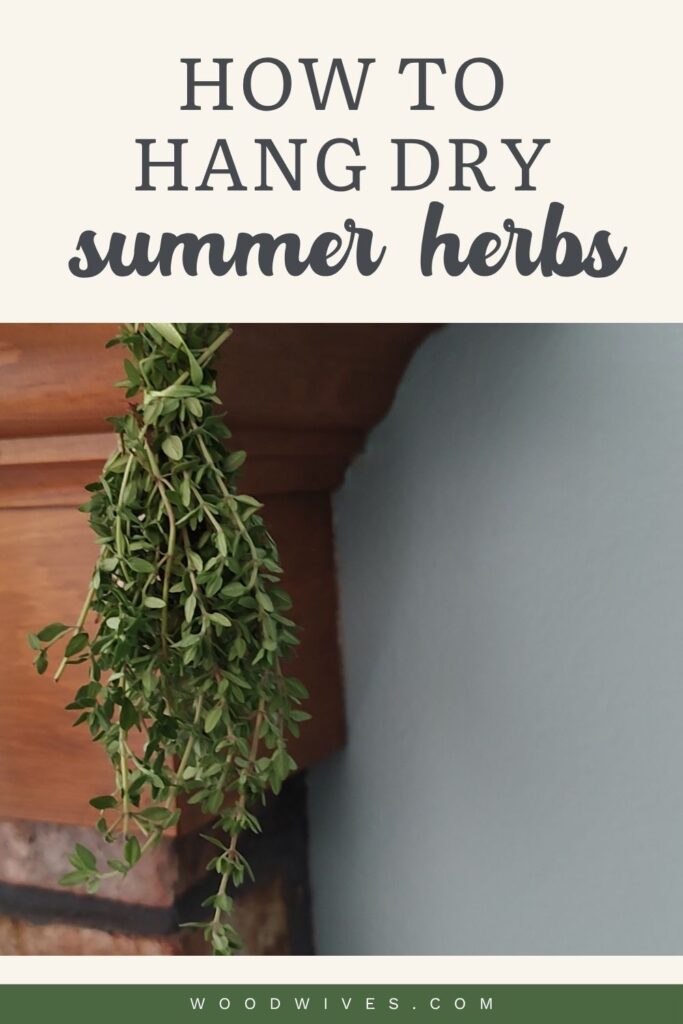
Once your bundles are made, find a cool place to hang dry summer herbs, away from direct sunlight. I installed tiny Command hooks on my fireplace mantel just for drying herbs (I use these little hooks for decor and the mountain of Christmas stockings as well). You could also hang them from the sides of upper cabinets, on a clothes drying rack, along the back of a tiered garden stand, in a cupboard, an herb drying rack (affiliate link) or even create a garland of hanging herbs.
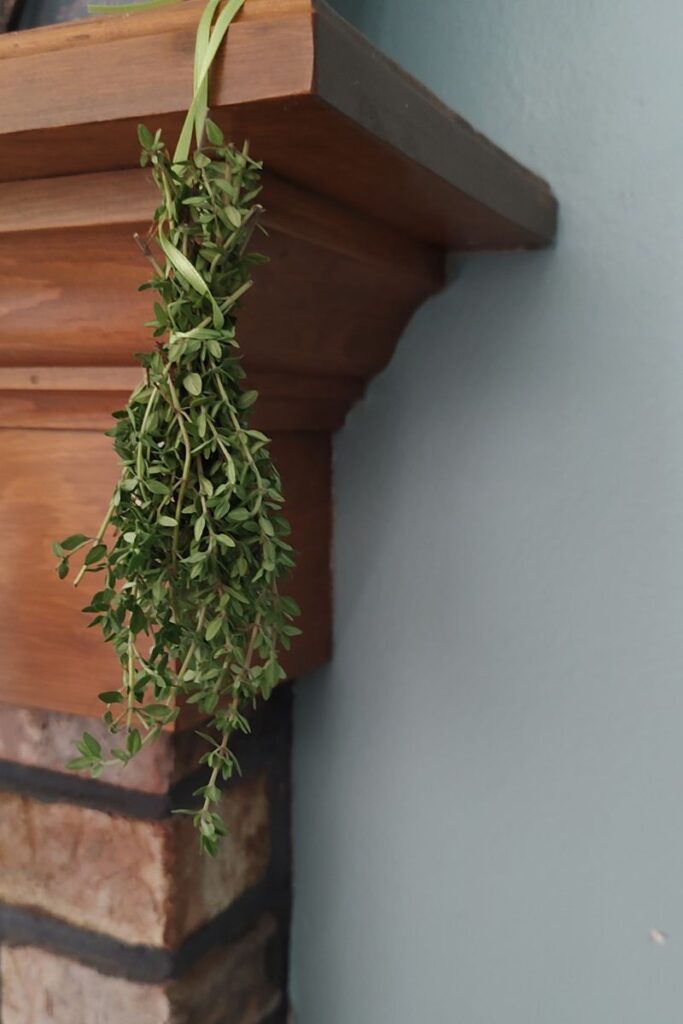
Hang the bundles of herb for a few weeks.
Once they are dry, carefully take them down and clip the string. I like to crush the leaves and store them in a jar, but you could also leave them whole if you like. Dried like thie they last for a really long time and taste amazing in your dishes.
TIP: Sage, basil, and bay leaf do a little better if you pluck each leaf and separately place them on a paper towel. Cover with another paper towel and leave overnight. If the leaves are still damp in the morning, place on fresh paper towels – repeat until dry and crumble easily in your hand. You can also chop and freeze them in ice cube trays with olive oil! Pop out the cubes and put them in a resealable container and use all winter long.
Process and store dried herbs
Check your herbs for dryness. If a leaf easily crumbles in your hand, they’re done!
For herbs with tiny leaves, like thyme, the easiest way to remove the leaves is between your palms. Get a giant bowl and untie the herb bundle. Take a sprig or two of thyme and rub them between your palms over the bowl, sort of spinning them back and forth in your hands. The little leaves fall right off and into the bowl. You may have to pick out a few little stems, but by far this is the fastest way I’ve found.
For other herbs and flowers, they are easily plucked.
You may want to crumble them further, depending on how you plan to use them. Usually I just do this by hand but some like to run them through a coffee or spice grinder or crush them with a mortar and pestle. You won’t need to wear a fragrance today, you now smell amazing.
Store in a jar. A jar can work really well and shaker lids that fit canning jars are so useful! This is a good use of saved jars from store-bought foods. Amber jars work beautifully if you store your herbs out in the open, if you have clear jars make sure to store them in a pantry or cupboard away from direct light. Whatever jar you use, label with the date, year, and the herb inside.
TIP: You don’t have to store your herbs individually, you can also create blends like Viviane’s Herbes de Provence
Your dried herbs should keep at least two years with no loss of flavor or scent. How nice will winter be with a little summer sprinkled in your stew?
FAQs
Absolutely not.
Any time of the year if you get a good deal on a bunch of herbs, buy them and dry them.
Yes! Laying them out in the sun under a protective sheet of cheesecloth or a dehydrator can work really well.
I know some people have used their oven but I haven’t tried that yet. If you do, tell me about it!
Dried herbs are usually much stronger than their fresh counterparts.
When a recipe calls for fresh herbs, use 1/4 to 1/3 of the amount if substituting with dried herbs.